After putting a lot of effort into project planning, suddenly you observed that one of your tasks took much longer than expected and during that time a new assignment pop-up.
Also, in such a situation one of the important team members took leave for a few days.
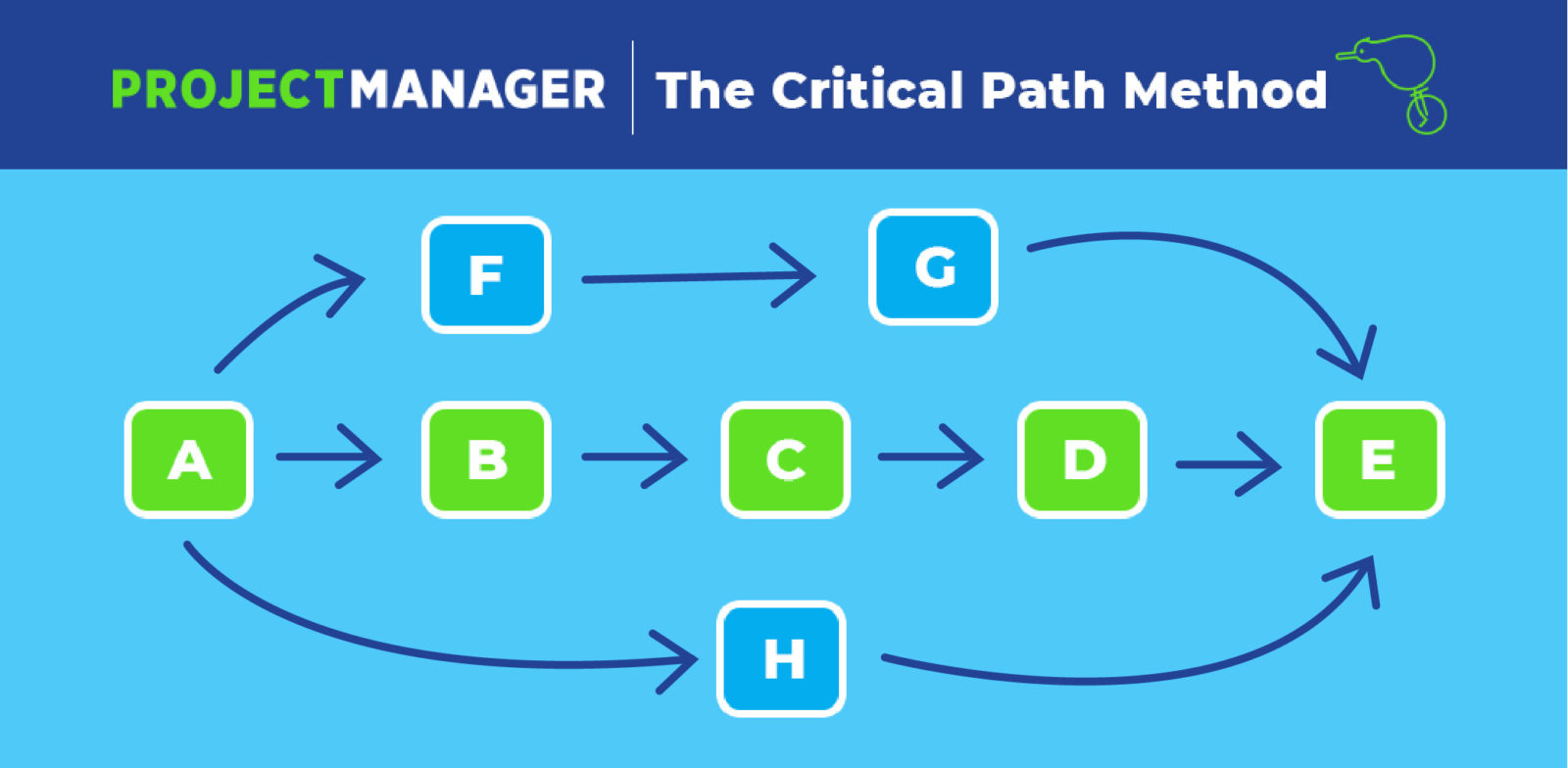
Source: Projectmanager
But you shouldn’t let those events frustrate you, with the Critical Path analysis you can address all these issues.
“A project without a critical path is like a ship without a rudder.” — D. Meyer, Illinois Construction Law
If something comes in the team’s way, you can look for the alterations without causing any delay in the milestones or missing any deadlines.
What is a critical path in Project Management?
A critical analysis is a method of project management.
It creates the shortest timeline for your project, looking at the tasks needed to complete the deliverables, along with the estimated time needed for each step, dependency of the task, and the final milestones.
It is a methodology planned to handle your project in an intelligent way.
With a Critical path, you get the idea about the tasks which can be a reason for the project fall.
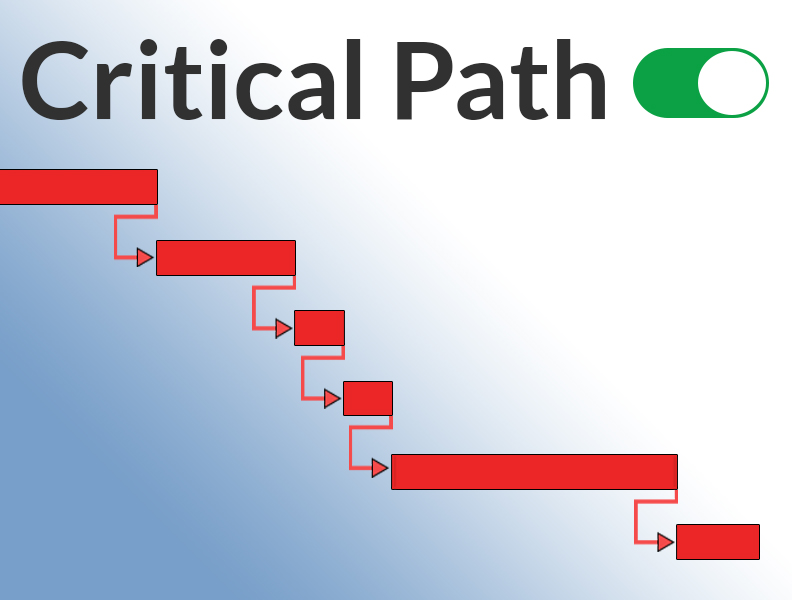
Source: Planacademy
It will show you the timeline of the Gantt chart, and the task in the critical path turns red. The tasks that are not on the critical path remain in their original color.
“No matter how good the team or how efficient the methodology, if we’re not solving the right problem, the project fails.” – Woody Williams
How do you find the Critical Path?
It’s time to find the critical path in your projects, but how?
To help you identify the critical path in your projects here is a step by step description:
1. Outline the Project scope
As you start finding your critical path, you need to break down what’s involved in the projects.
Breakdown the project structure into:
Identify the task: Figure out the details of the project, have a discussion with the stakeholders, and identify the tasks that are necessary for the project.
Put the task in order: As you get the idea about the task that needs to be included in the project. The next thing you need to do is put them in order. This will help to identify the dependent task.
Duration for task: To find out the critical path in your project, you need to figure a duration for each task. This will help to identify the longest path.
2. Identify the potential path
After identifying the project scope, it’s time to know the paths and strings. A project holds many connected and dependency tasks. So you need to identify these tasks.
3. Identify the critical path
To find out the critical path, you need to identify the task with the longest sequence. The longest sequence in your project management is the critical path in your project.
Can the Critical Path change During the Project?
A project has many series of interrelated tasks. The team tries to complete the tasks, so as to reduce the stress of critical paths.
The development in the project reduces the critical path in a task or it might bring a new critical path in your task. So, the critical path in the task changes with the development of the projects.
The project scope either reduces or you might need to assign more people to your task. You can get more than one critical path in a task. It usually changes with the progress in the work.
How can a Critical Path help in Project Management?
In the present era, we handle many important projects. These projects are not easy to handle. It needs a lot of planning and execution.

Project Management Software is vital for companies as it streamlines processes and improves team collaboration. Important aspects to look for include:
Task Management
Resource Allocation
Time Tracking
Communication Tools
Reporting and Analytics
Project Management Software has transformed the way businesses operate by providing a centralized platform to manage various tasks. Its importance lies ...
Project Management Software is vital for companies as it streamlines processes and improves team collaboration. Important aspects to look for include:
Task Management
Resource Allocation
Time Tracking
Communication Tools
Reporting and Analytics
Project Management Software has transformed the way businesses operate by providing a centralized platform to manage various tasks. Its importance lies in helping teams to organize work efficiently, ensuring tasks are completed within deadlines, and resources are allocated wisely. By offering features such as task management and time tracking, businesses can have a clearer view of ongoing projects, enabling them to address potential issues promptly. The software acts as a communication hub where team members can exchange ideas and updates, preventing delays and misunderstandings.Furthermore, Project Management Software is pivotal in decision-making processes due to its powerful reporting and analytics capabilities. The data collected allows managers to evaluate project progress and performance critically. This insight is crucial for optimizing productivity and allocating resources efficiently. Without such software, companies might struggle to balance numerous projects simultaneously. Its importance is underscored by the way it enhances transparency across departments and facilitates a culture of accountability, ultimately leading to improved business efficiency and success.
Hello community,
I am a Program Management Office Lead at a medium-sized tech consulting company.
We plan to replace Microsoft EPM with JIRA and big picture/Tempo plugins.
Which product do you prefer: Jira Vs Microsoft EPM? What are the differences between these two products? What are the pros and cons of each product?
Thank you for your help.
Below is a comparison of Jira and Microsoft EPM:
Jira
Pros:
Open source and free to use
Highly customizable and extensible
Wide range of features, including project management, issue tracking, and agile reporting
Easy to use and learn
Cons:
Setup and configuration may be complex
May not be as scalable as some commercial Project Management solutions
Microsoft EPM
Pros:
Part of the Microsoft Office suite, so it integrates well with other Microsoft products
Wide range of features, including project management, portfolio management, and resource management
Easy to use and learn
Cons:
Not open source, so it may not be as customizable as Jira
Could be expensive
When choosing a Project Management solution, also consider these other factors:
The Project Management solution you need will depend on the size and complexity of your projects. A small project may require a simpler solution, while a large one may need a more complex solution.
Choose a Project Management solution with the features you need to manage your projects effectively.
The cost of each solution can vary depending on the features and functionality offered.
Some Project Management software or apps could be more complex to use than others. If your technical expertise is limited, you may want to choose a more straightforward solution.
Based on your specific situation, some recommend Jira as it is an open-source, highly customizable, and extensible solution. It also has many features, including project management, issue tracking, and agile reporting. Jira may be a good fit for a medium-sized tech consulting company looking for a flexible and scalable Project Management tool.
Download our free Project Management Software Report and find out what your peers are saying about Atlassian, Microsoft, monday.com, and more! Updated: December 2025.