
More and more people around the world are turning to mobile banking apps for speed and ease of taking care of all of their banking needs with the swipe of a finger and from the comfort of their own homes. But with the prevalence of mobile banking apps come greater risks to the security of sensitive and confidential information and financial details, and opportunities for hackers to steal money and/or commit fraud.
There are many security unknowns when it comes to mobile banking. Part of what makes going mobile so daunting is the complexity of the mobile banking process and the possibility of security breaches from the ends of multiple players - the customers, the financial institution, the wireless carrier, and third-party app developers.
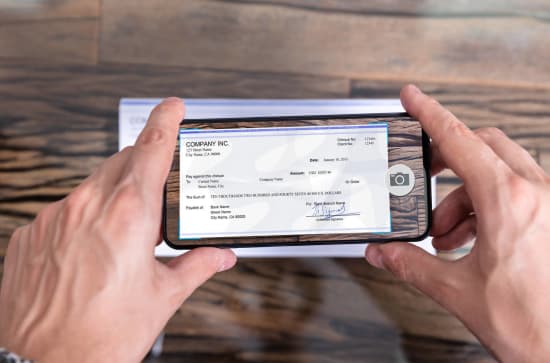
Mobile Banking Security Threats
Security risks threaten both mobile banking customers and mobile banking businesses. Risks to mobile banking customers include the possibilities of identity theft, mobile fraud, and account takeover.
There are many more risks to businesses that use mobile banking services. These include:
• Data breach - unauthorized access to or theft of data, including personal, financial, or business data.
• Mobile app piracy/copycat apps.
• Back-end risk - exploitation of the mobile app to access or control back-end data, systems, and services.
• Loss of intellectual property and trade secrets.
• Loss of revenue - a breach of an app with one million users or more can cause a loss of over $6 million per month.
• Loss of brand reputation - when a mobile breach occurs, the repercussions to your company can be devastating and sometimes even irreversible.
8 Mobile Banking App Security Features
The following are eight important techniques and security layers for efficient protection of mobile banking applications:
1. Secure connectivity between the app and the back-end server. This both ensures that the application is only communicating with the intended system and simultaneously protects the data being sent.
2. Application hardening (or application shielding) mechanisms. These protect the app from tampering, misuse, IP theft, and vulnerability exploitation.
3. A sentinel framework for runtime application self-protection (RASP). Software sensors should constantly be monitoring all parameters for attacks, and be able to act accordingly when they detect one.
4. Key protection. This prevents the ability of attackers to recover the app's various cryptographic keys.
5. Device Fingerprinting. This allows the app to securely and uniquely identify devices to remote servers.
6. Public Key Infrastructure (PKI). This is used to check the legitimacy of mobile banking apps.
7. Multifactor user authentication such as biometric identification and authentication.
8. Regular updates. App security mechanisms should constantly be updating to ensure the discovery and handling of any new vulnerabilities.
Recommended Tools for Mobile Banking Application Security
Check out some of these top-rated Application Security Tools to ensure your mobile banking safety:
• SonarQube manages code quality, offers visual reporting on and across projects, and follow metrics evolution. SonarQube is available for 27 different programming languages, fitting with your existing tools and taking proactive steps to ensure the security of your app.
• Veracode simplifies application security by using five different analysis types. It also empowers developers to find security defects in their apps and then fix them.
• Sonatype Nexus Lifecycle allows for full control of your software supply chain and lets you decide what policies and methods work best for you and your app.








A digital wallet, also known as an electronic wallet, is a powerful financial transaction application that operates on various connected devices.In this article: https://www.cleveroad.com/blog/how-to-make-a-mobile-wallet-app-and-get-your-benefits/ we'll look at the most important components of developing a successful digital wallet software, such as top features, development methods, obstacles, security, compliance integration, technological stack, and more.